It’s five years this month since lockdown forced us all indoors, our faces squashed into a gallery of flat squares. What’s happened since then? For me, lots of good things.
“You OK, Ali? You look like the Turin Shroud!”
After my early attempts at videoconferencing, with a grainy black and white webcam, I retreated for several years and kept my face firmly off the screen. I was happy to talk for hours on the phone, but not to show my face. Lockdown forced me to re-enter the arena. First there was FaceTime for connecting with family and friends; then there was Zoom, with other platforms like Google Meet and Microsoft Teams hot on its heels.
Changed ways of working
I applauded those people who worked with imagination to make use of all the interactive features, so we could have fun contributing ideas in real time. It was truly a two-way thing. One of them was Beth Pipe, a woman who wears many hats, most of which she has knitted herself. As The Cumbrian Rambler, she is a popular and prolific outdoor writer and now a radio DJ. With her sensible hat on, she is a business skills trainer for the legal profession.
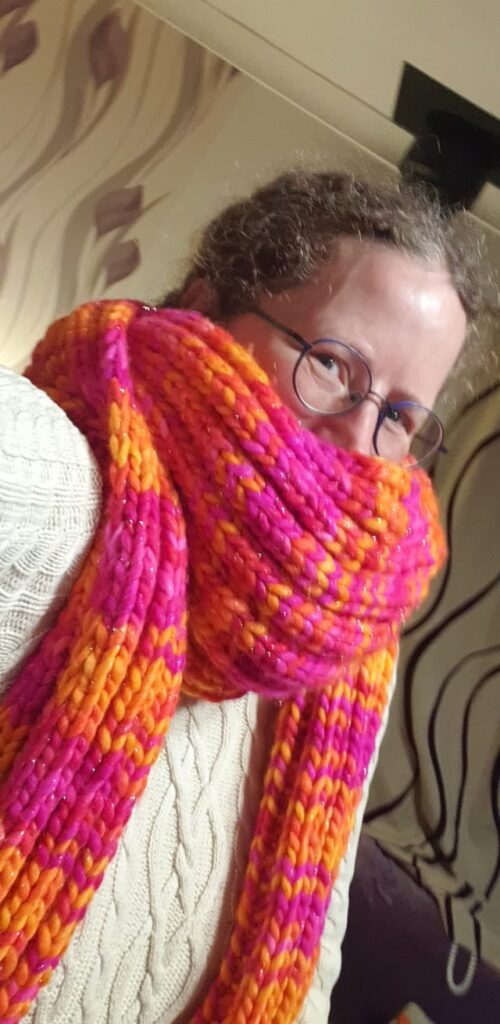
Beth Pipe
Beth couldn’t afford to sit around doing nothing, and made good use of her time in lockdown to build her online training skills. First, she enlisted her friends to help her try out the technology. One day she invited us to an Adobe Connect online meeting where she encouraged us to scribble on a virtual whiteboard, make notes and speak, and have conversations in smaller groups. At the press of a button, not always intentionally, she could move us around breakout rooms as if through the space-time continuum. It was hilarious, and we were happy to help her get started.
I asked Beth what she thought she might be doing if it weren’t for videoconferencing.
“Well, I’d be spending a lot less time in my house slippers. Seriously, pre-lockdown I was racing all over the country delivering sessions. These days it’s 90% online, plus I’ve picked up more writing gigs so I am (thankfully) home a lot more than I was pre-lockdown – something that wouldn’t be possible without Zoom and friends.”
Zoom in the room
Two other people who had to think up something quickly to keep food on the table were London-based neuro physiotherapists Anna Kharin and Laura Douglas. Friends for more than 10 years, they’d met as MSc physiotherapy students. Unable to see their local clients in real life, they took to Zoom in 2020 with a pilot class of six people. It made sense for Anna and Laura to join forces and bring their passion for activity and high intensity rehab together in a novel way at a time when people needed it.
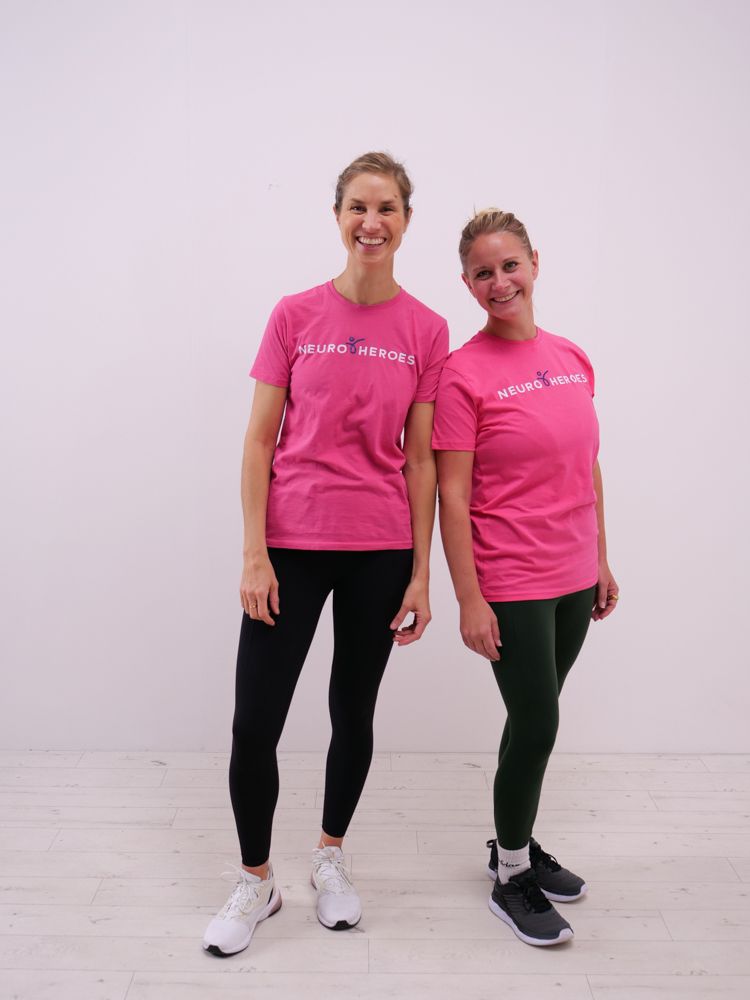
Neuro Heroes founders Laura Douglas (l) and Anna Kharin
Today, Neuro Heroes has a team of 14 neuro physios delivering more than 26 classes a week to 216 people all over the UK (including me). Their real-time online classes provide a balanced diet of co-ordination, strength, cardiovascular fitness and big, powerful neuroplastic moves. Everyone in the class gets helpful, individual feedback, and comes away smiling. Through the Neuro Heroes Community Exercise Fund they offer free classes for people with Parkinson’s and multiple sclerosis who could not otherwise afford this.
Neuro Heroes’ innovative business model won the Person-Centred Care Award at Parkinson’s UK’s national industry awards, in 2021.
Without Zoom, Anna says:
“I was all ready to give up physio and open up a cafe!”
While Laura reflects:
“Zoom and the pandemic have offered me the step change in my career I didn’t know I needed. The energy and determination I feel to do well for our Neuro Heroes community is not something I was ever expecting to experience in work.”
New etiquette
Sadly, other people very soon slipped into their old in-person habits of presenting dull, text-heavy slides and hogging the agenda, leaving very little time for discussion. More than once I’ve nodded awake and hoped no-one else had noticed. A new etiquette was required:
- raising a virtual hand
- knowing where to find the mute button and how to use it
- managing a tuberculous cough or a barking dog
- not treating the others to a close-up guided tour of your nostrils
- not looking at your phone
- keeping out unwanted visitors
In one virtual meeting I attended, a participant’s husband strolled casually into the room having made no attempt to tie up his bathrobe, leaving little to the imagination. There are some things you just can’t unsee.
The benefits of Zoom/Teams/Meet
Here are some other things I’ve been able to do with video conferencing
- Improve my form on the rowing machine with the help of a top Paralympian (Naomi Riches, Zoom Ergos)
- Keep a local support group connected through lockdown, and rebuild activities afterwards (Eden Parkinson’s)
- Work with the patient participation group at my local medical practice to offer constructive feedback and bright ideas (most of which, sadly, fell on deaf ears, but we had fun trying)
- Be silly, make mistakes, improvise, live in the moment and face the unknown with confidence (Robert Cochrane, Yes, And… Exercise!)
- One-to-one speech therapy without leaving my house (West Suffolk NHS Trust)
- Gather my school class of 1970 for an alumnae reunion
- Work with top health professionals to create a booklet, Getting the right healthcare, to help people with Parkinson’s navigate the health care system and manage their condition better. (Parkinson’s Excellence Network).
And it’s put colour in my cheeks. I don’t look like the Turin Shroud any more! I’m hard pushed to think what I’d do without Zoom now. The real delight comes when we meet in real life and become animated, three-dimensional human beings with legs, instead of little postage stamps on the screen.
Image by Alexandra_Koch from Pixabay


2 Comments
Rose · 14 March 2025 at 9:21 pm
Great blog as per usual. You described neuroheroes perfectly. Love them.
Sam · 15 March 2025 at 10:10 am
For us, it was music (and yoga.)
It is not possible to make music together via Zoom, easily and without mega-expensive kit. Our little Singalong choir moved to Zoom, avoiding latency issues by our MD playing the keyboard and singing and everyone else muted but singing along. It was a success and brought partners at home into play, who would otherwise not have traipsed along to the village hall. Singers were usually accompanied by a glass of wine.
So, each singer heard Kate play and sing, and also their own voice (and partner.) In our case, our eight year old granddaughter joined in too.
A different experience but it saved us. We are back to the village hall, now, in some cases with the partners.
Yoga, is a whole ‘nother story of course.